VIRGINIA TECH · JAN 2026–MAY 2027
Accelerated Master of Engineering
Computer Engineering · Expected May 2027
- Real-Time Systems
- Cyber-Physical Systems
- Principles of Robotic Systems
COMPUTER ENGINEERING / VIRGINIA TECH
A Computer Engineering graduate student specializing in machine learning and intelligent systems.
Bridging the gap between hardware architecture and software systems — from sensor-driven robots to AI-powered applications.
01 / ABOUT
I’m a Computer Engineering graduate student at Virginia Tech, with a background in machine learning and hands-on experience spanning embedded robot firmware, sensor integration, data pipelines, and full-stack applications. I enjoy connecting low-level hardware behavior with high-level software that makes a system useful.
I'm also working through the Hugging Face AI Agents Course, exploring LLMs, tool calling, and agentic workflows.
Understand the system.
Build the connection.
Test it in the real world.
EDUCATION / COURSEWORK
VIRGINIA TECH · JAN 2026–MAY 2027
Computer Engineering · Expected May 2027
VIRGINIA TECH · AUG 2022–MAY 2026
Computer Engineering, Machine Learning
02 / TECHNICAL SKILLS
03 / PROJECTS
Robotics, machine learning, and full-stack applications.
SENIOR DESIGN · AUG 2025–APR 2026
A sensor-driven robot connecting LiDAR, GPS, and inertial sensing with autonomous navigation and a live web control platform.
Integrated an RPLIDAR A1M8, u-blox GNSS, and ICM-20948 inertial sensor with a navigation state machine, obstacle avoidance, and battery monitoring. Arduino C++ firmware exchanges telemetry and commands with FastAPI; WebSockets update the browser interface.
Presented system design, testing methodology, and performance results at Virginia Tech's Senior Design Expo, with a live robot demonstration.
SYSTEM OVERVIEW
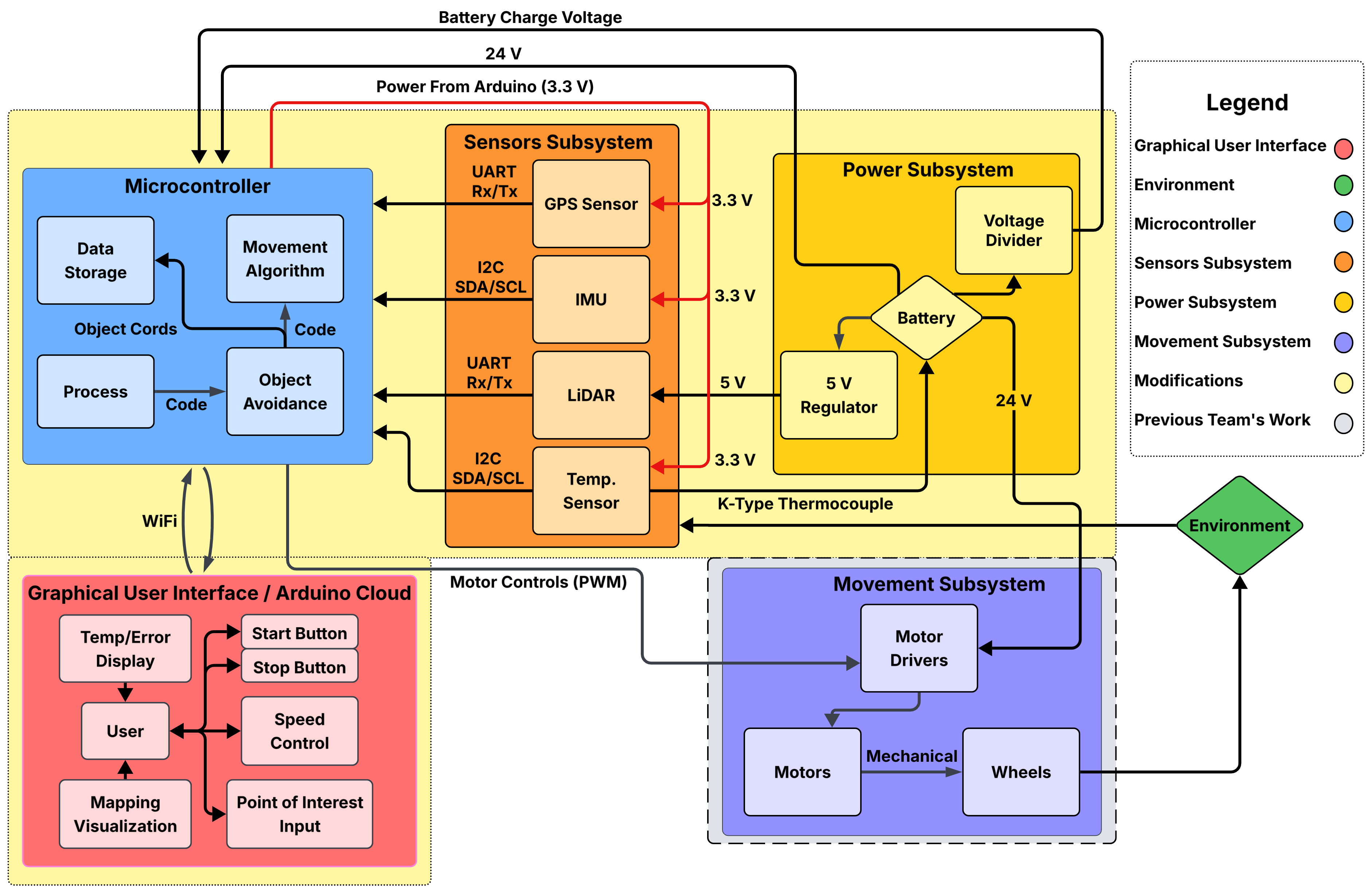
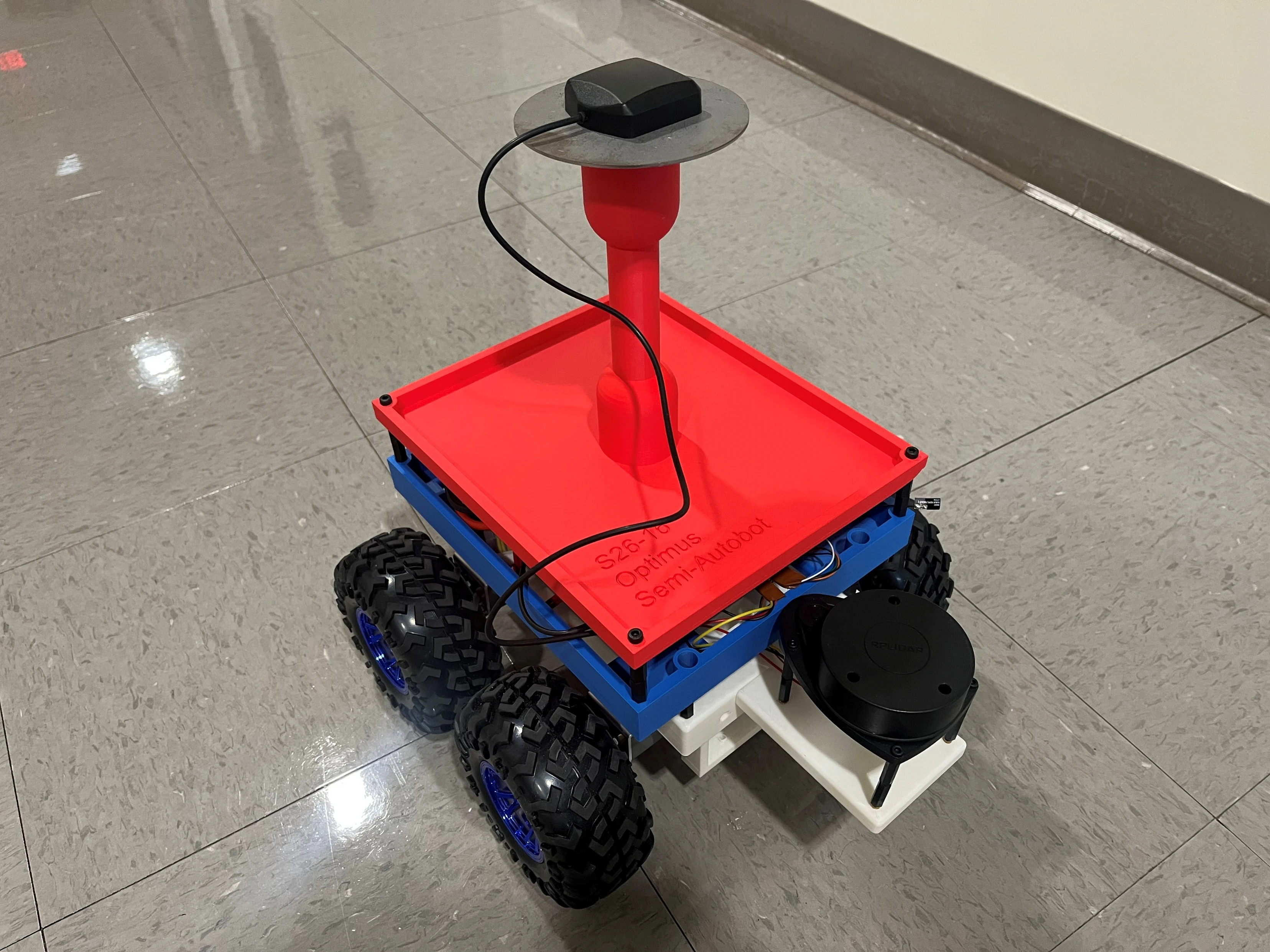
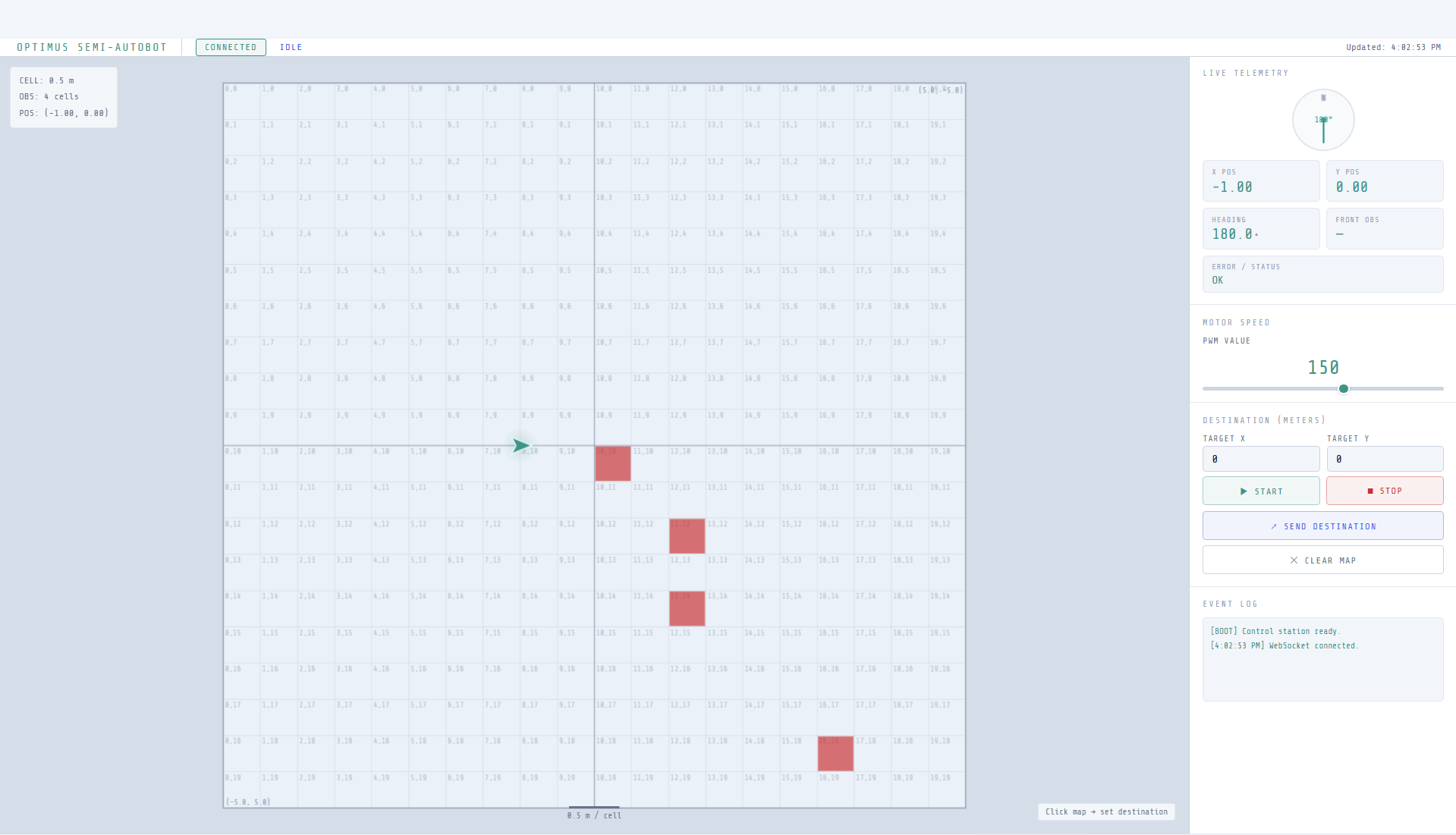
The design combines GPS and IMU data through a Kalman filter, Follow the Gap obstacle avoidance, dead reckoning during GPS loss, and live 2D occupancy-grid updates. The team set a 0.5-meter arrival tolerance as a project objective.
Team: Christian Font, Gavin Chiorazzi, Joshua Jones, Daniel Kang, Jackson Childers, and Adli Qanadilo.
SME / customer: Dr. Adams, Virginia Tech. Mentor: Dr. Shelly Stover. The team also thanks VT CRO, Dr. Joe Adams, Kim Medley, the previous project team, friends, and family.
Live video recognition using geometric hand-landmark features and an SVM classifier, trained on approximately 5,000 samples.
Converted 21 hand landmarks into 57 geometric features, including normalized coordinates, fingertip distances, angles, and extension flags. Trained a scaled RBF-kernel SVM with an 80/20 stratified split; OpenCV and MediaPipe support live webcam inference. Evaluation code produces a classification report and confusion matrix.
Tabular Q-learning with symmetry-aware state representation. Achieved a 96% win rate against random opponents.
Represented 765 unique base game states with unordered maps, accounting for board rotations and reflections. Trained over thousands of episodes with decreasing exploration, recursive reward propagation, and Bellman value updates.
Source snapshot for review.
A logistic regression classifier built with NumPy to recognize handwritten MNIST digits.
Implemented model training using gradient-ascent optimization and evaluated training and testing performance as part of machine learning coursework.
A multi-class PyTorch classifier refined through model evaluation and hyperparameter tuning.
Built and tuned a neural network for digit recognition, using iterative evaluation to improve classification accuracy.
A prediction pipeline combining social media sentiment with historical market data.
Combined sentiment and market features with feature selection, robust scaling, and configurable logistic regression, random forest, gradient boosting, and voting models. The code includes time-series evaluation and an inference pipeline that reloads the trained model and preprocessing artifacts. Evaluates F1 and ROC AUC; no unverified score is claimed here.
Source code only; dataset not included.
A team-built web platform using constraint-based optimization to generate conflict-free staff schedules.
Built around a Next.js interface and FastAPI backend with MongoDB storage. The supplied code includes employee availability updates, schedule generation, shift swaps, and a chat-based scheduling assistant. The résumé also describes constraint-based scheduling with Google OR-Tools.
An AI-powered guest management platform for hospitality operations, developed collaboratively during a hackathon.
A Next.js frontend communicates with a Django REST API to manage guest profiles, preferences, and booking histories. The supplied project includes role-specific guest views and AI-generated hospitality insights using Groq. Built collaboratively during a hackathon.
Source snapshot for review.
04 / EXPERIENCE
MAY–JUL 2024
Data Engineering Intern
Worked in a six-person Scrum team on AWS database solutions supporting federal agency grants data.
Python · SQL · PostgreSQL · Pandas · PySpark · AWS
05 / CONTACT
Have a project, an opportunity, or a technical question? I'd love to hear from you.